

Double-Deep Pallet Racking
Double deep pallet racking is a high-density warehouse storage solution designed to help warehouses and distribution centres across Sydney, Melbourne, Brisbane, Perth, and Adelaide maximise storage capacity while optimising workflow.
By storing pallets two deep per bay, this system reduces the number of aisles required, freeing up valuable floor space without sacrificing operational efficiency. Built to meet Australian Standards for structural strength and safety, it provides flexibility and reliability for businesses of all sizes.

What Is Double Deep Pallet Racking?
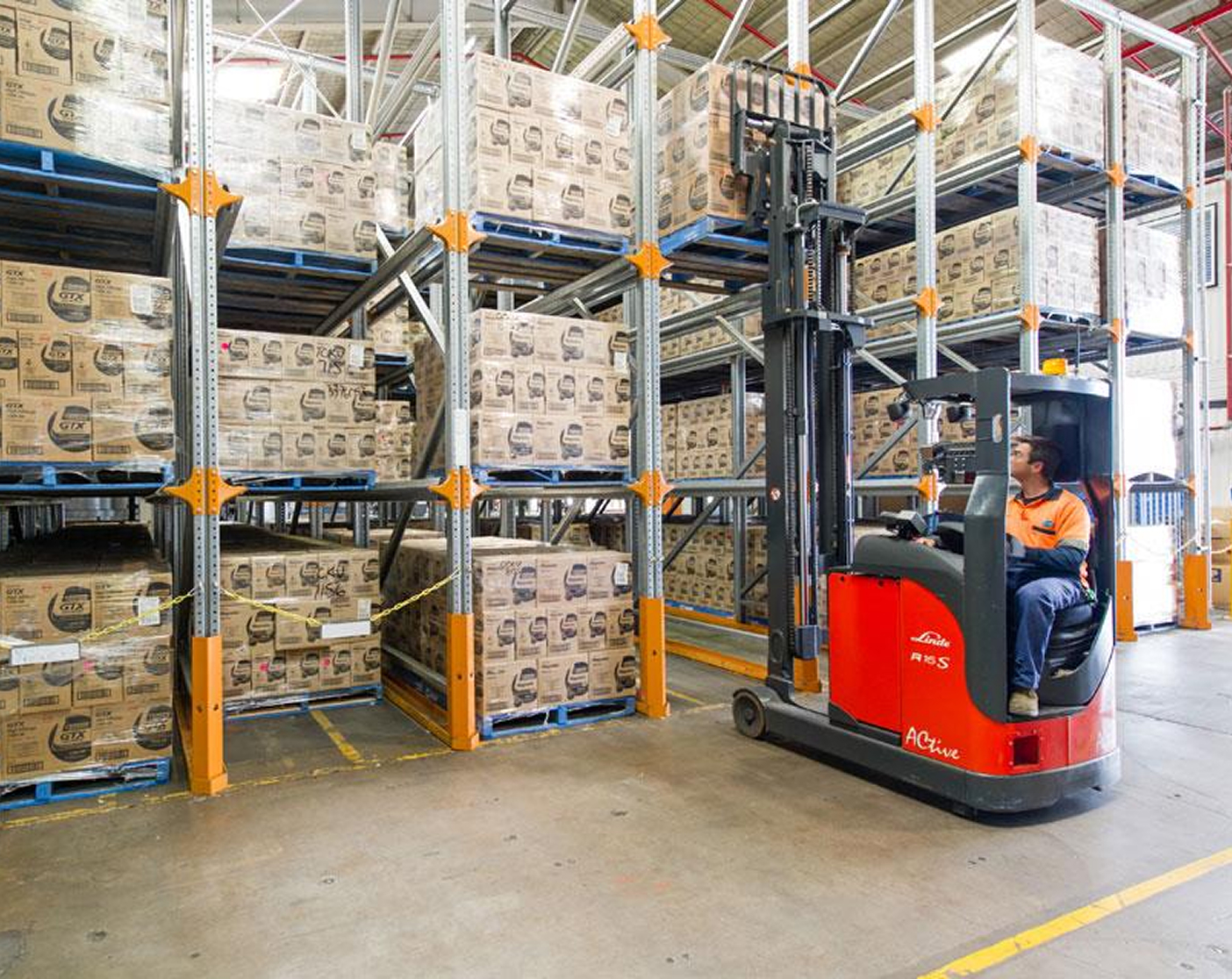
Double deep pallet racking allows two pallets to be stored back-to-back within a single bay. This configuration increases storage density while still maintaining reasonable accessibility. Unlike standard single-deep racking, double deep systems require forklifts with extended reach or pantograph attachments to access the rear pallets.
This system strikes a balance between storage density and selectivity: it offers higher capacity than single-deep racking, yet is more accessible than very high-density options such as, selective pallet racking, drive-in pallet racking or shuttle pallet racking. For businesses managing bulk SKUs, it can significantly improve operational efficiency.
Key Features
Double deep racking combines durability, adaptability, and operational efficiency. Key features include:
- High-Density Storage: Store two pallets deep to increase pallet positions per square metre.
- Adjustable & Modular Design: Beam levels and bay layouts can be customised to suit different pallet sizes and warehouse dimensions.
- Robust Construction: Made from high-tensile steel with galvanised or powder-coated finishes for long-lasting durability.
- Guide Rails Available: Optional guides support forklift operators for safe and precise pallet placement.
- Compliant & Safe: Engineered to meet AS 4084‑2023 Australian Standards for structural safety.
- Optional Add-Ons: Rack protection, mesh decking, and customised beam sizes enhance operational flexibility.
Double deep racking is also compatible with complementary systems, such as selective pallet racking and push back pallet racking, giving warehouses the flexibility to optimise their layouts for efficiency.

Benefits of Double Deep Pallet Racking
Investing in double deep racking delivers tangible benefits for warehouse operations:
- Maximise Space: Fewer aisles increase storage capacity within your existing footprint.
- Cost-Effective Storage: Reduce cost per pallet position compared to standard layouts.
- Improved Efficiency: Shorter travel distances for operators streamline picking and placing processes.
- Balanced Selectivity: Maintain access to half of the pallet positions directly while increasing storage density.
- Scalable Solution: Expand your system as storage requirements grow.
These benefits make double deep racking ideal for high-volume warehouses, from Adelaide and Hobart to Darwin and Newcastle, helping businesses improve workflow without sacrificing storage efficiency.

Who It’s For
Double deep pallet racking is best suited for warehouses and distribution centres that manage large volumes of similar SKUs. Typical applications include:
- Warehouses storing bulk inventory.
- Distribution centres with high throughput needs.
- Manufacturing facilities with consistent stock items.
- Cold storage or dry storage environments seeking efficient use of space.
By focusing on businesses with predictable pallet movement, double deep racking delivers maximum efficiency while still providing access for daily operations. For guidance on optimising your warehouse layout, a warehouse design consultation can provide customised recommendations.
How It Works
Double deep racking operates on a simple, logical system:
- Back-to-Back Bays: Racks are configured so two pallets fit in a single bay, one in front and one behind.
- Loading: Forklifts with deep-reach or pantograph attachments insert pallets into front and rear positions.
- LIFO Operation: Rear pallets are accessed after front pallets, following a Last-In, First-Out workflow to maintain inventory control.
Technical Specifications
Our double deep racking systems can be customised to meet warehouse needs. Standard specifications include:
- Height: Up to 10–12 metres.
- Beam Spans & Load Capacities: Customised based on bay design and pallet weight.
- Material & Finish: High-tensile steel, galvanised or powder-coated.
- Compliance: Designed to meet AS 4084‑2012 Australian Standards.
Double deep racking can integrate with other high-density systems, including cantilever pallet racking or shuttle pallet racking, depending on warehouse layout and SKU types.
Comparison With Other Racking Systems
Double deep racking offers a balance between selectivity and density.
This comparison highlights why double deep racking is versatile for businesses needing both storage efficiency and practical access. More options are available within our pallet racking range to suit varying warehouse requirements.

Ready to Optimise Your Warehouse?
Maximise storage, streamline workflow, and enhance operational efficiency with a double deep pallet racking system made for your warehouse. Give us a call on 0410 894 157 today to request a free consultation or download our technical brochure today and take the first step toward smarter, higher-density storage.
Installation time depends on warehouse size, rack configuration, and safety requirements. Small setups may take a few days, while larger multi-bay systems may take several weeks. Professional installation ensures compliance and efficient use of space.
Its modular design allows adjustments to beam heights, bay lengths, and spacing to meet evolving storage needs. Modifications should follow guidance to maintain safety and compliance.
Double deep racking works best for warehouses with high volumes of uniform products and predictable storage patterns. Facilities requiring constant access to a wide variety of SKUs may benefit from alternative solutions like push back pallet racking or drive-in pallet racking.
Safety measures include properly anchoring racks, using protection systems like bollards, adhering to load limits, and training operators. Regular inspections help prevent structural damage.
Double deep racking can integrate with automated storage and retrieval systems (AS/RS) and forklift guidance technologies, improving picking speed, reducing human error, and optimising warehouse workflow.
Rear pallets are accessed after front pallets, following a Last-In, First-Out (LIFO) workflow. This influences stock rotation, particularly for perishable or time-sensitive goods, so careful planning is recommended.
Double deep racking usually requires a deep-reach or pantograph forklift, which extends its forks to safely access rear pallets. Standard forklifts cannot reach the back efficiently, so using the correct equipment ensures safety and operational efficiency.