

Key Takeaways
- New pallet racking is engineered to meet AS 4084:2023. Every component is manufactured to current Australian Standards, giving you full compliance from day one and eliminating uncertainty around structural integrity, load ratings, and safety obligations.
- Annual inspections are mandatory and required for compliance under AS 4084:2023. Regular annual inspections help identify damage or safety concerns, ensuring ongoing compliance and the integrity of your pallet racking system.
- Used racking can reduce upfront costs, but comes with trade-offs. Pre-owned systems may not meet the latest standards, and factors like unknown load history, wear, and compatibility issues can create hidden costs down the line.
- Your decision should factor in more than price. Warehouse layout, stock profile, compliance requirements, long-term operational goals, and selecting the right pallet racking system for your specific requirements all play a role in determining whether new or used pallet racking is the smarter investment.
- Working with an experienced racking supplier matters. Whether you choose new or used, partnering with a supplier who understands Australian Standards and can assess your specific needs ensures your racking system performs safely and efficiently.
Choosing between new and used pallet racking is one of the most common decisions warehouse operators face when setting up or expanding their storage systems. Both options have their place, but the right choice depends on your operational requirements, compliance obligations, budget, and how long you need your racking to perform.
At One Stop Pallet Racking, we supply and install new warehouse pallet racking systems across Sydney, Melbourne, and Brisbane. We work with businesses every day to help them make informed decisions about their storage infrastructure, so we understand the factors that matter most when weighing up new versus used racking.
This guide breaks down the key differences, benefits, and considerations so you can make the right call for your warehouse.
What Defines New Pallet Racking?
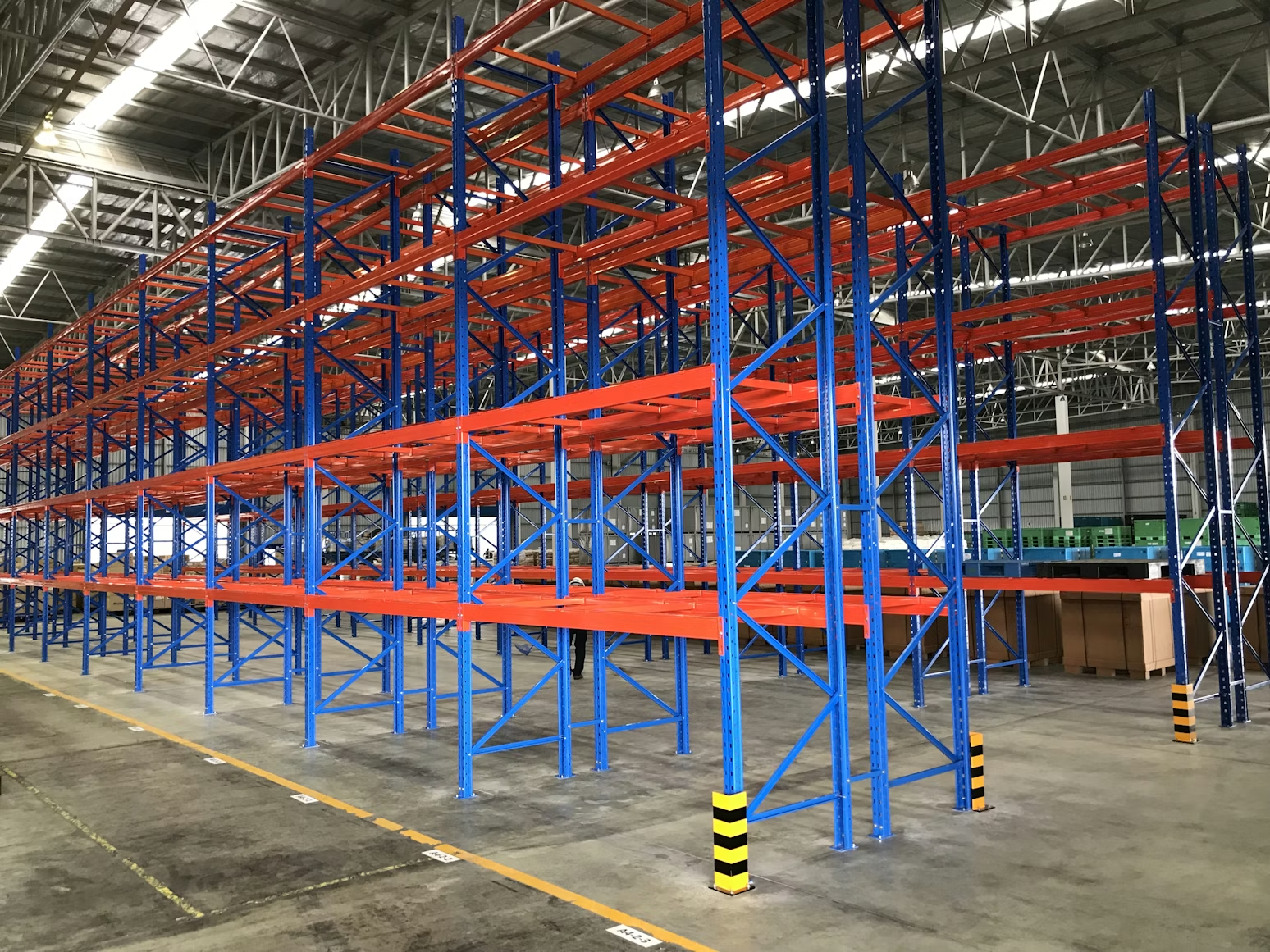
New pallet racking refers to systems that are manufactured, supplied, and installed as brand-new components. Every upright, beam, brace, base plate, and connector is produced to current specifications, with robust pallet racking frames and professional racking installation ensuring safety and compliance with Australian Standard AS 4084:2023. We also manufacture customised steel storage racking solutions to meet specific requirements, ensuring your system is customised for your warehouse needs.
When you invest in new warehouse pallet racking, you receive a system that is purpose-built for your warehouse layout, stock type, and operational requirements. Components are matched, load ratings are certified, and the entire system is backed by manufacturer warranties. There is no guesswork about the condition of the steel, the history of the components, or whether the racking will pass a formal inspection.
New systems can be configured in a comprehensive and diverse range of formats, including selective pallet racking, drive-in racking, push-back racking, double deep racking, cantilever racking, and shuttle racking. Choosing pallet racking should be based on your unique storage needs, space, and compatibility, and consulting with experts can help you select the most suitable solution. Customisation options include modular systems with expandable bays, adjustable beam heights, different rack depths, and accessories like mesh decking and safety barriers.
The most common types of pallet racking used in Australia include selective racking, double-deep racking, and cantilever racking. Selective pallet racking is the most versatile system, allowing individual access to each pallet and accommodating a range of pallet heights. The main standard for pallet racking safety in Australia is AS 4084:2023, which outlines the design, installation, and maintenance requirements for steel storage racking.
What Is Used Pallet Racking?
Used pallet racking refers to systems or components that have been previously installed in another warehouse and are being resold for reuse. These systems are typically dismantled from their original location, transported, and reinstalled in a new facility.
The quality of used racking varies significantly. Some systems may be only a few years old and in excellent condition, while others may have sustained damage, corrosion, or wear that affects their structural integrity. It is especially important to check for damaged beams during assessment, as these can compromise safety and should be replaced to maintain proper standards. The age, brand, previous use, and storage conditions all influence how suitable a used system is for your warehouse.
The Benefits of New Pallet Racking
Full Compliance with AS 4084:2023
One of the most significant advantages of choosing new pallet racking is that every component is designed and manufactured to comply with the current edition of AS 4084. The 2023 update introduced stricter requirements around floor fixings, upright protectors, load signage, seismic design, and inspection standards. New racking meets all of these requirements from the outset, which means your warehouse is compliant and inspection-ready from day one.
To maintain ongoing compliance and ensure the safety and longevity of your pallet racking system, regular annual inspections and maintenance are essential, as mandated by AS 4084:2023.
Customised to Your Warehouse
New warehouse pallet racking is designed specifically for your space. Your racking supplier works with you to assess your warehouse dimensions, evaluate available space, and identify specific requirements to ensure the racking system is fully optimised. They also consider ceiling height, floor condition, forklift type, stock profile, and workflow patterns.
The result is a racking layout that maximises your storage capacity while maintaining safe aisle widths, proper clearances, and efficient picking paths. New pallet racking can be customised to accommodate unique storage challenges or specialised inventory types.
Used racking, by contrast, was designed for someone else’s warehouse. The bay heights, beam lengths, and frame depths may not be an ideal match for your facility, and adapting a used system to fit a different layout often requires additional components or modifications that reduce efficiency.
Certified Load Ratings and Manufacturer Warranties
Every new pallet racking system comes with certified load ratings specific to the configuration installed in your warehouse. These ratings account for beam span, frame height, number of levels, and the type of unit loads being stored. This documentation is essential for compliance, as AS 4084:2023 requires that every racking system displays accurate rack load signs.
New racking also comes with manufacturer warranties covering defects in materials and workmanship. Used racking rarely includes any form of warranty, so if a component fails, the cost of replacement and downtime falls entirely on you.
Consistent Quality and Component Compatibility
When you purchase new pallet racking, every component is manufactured to the same specification, by the same manufacturer, at the same time. Beams, uprights, connectors, and safety clips are all designed to work together as an integrated system. This consistency is important for structural integrity and makes future expansions or reconfigurations straightforward.
Used systems are often assembled from components sourced from different manufacturers or production runs. Not all beams fit all frames, and not all connectors are interchangeable between brands or product lines. Mixing and matching can compromise both performance and safety.
Longer Service Life
New pallet racking, properly installed and maintained, delivers decades of reliable service. The steel is in its best condition, the protective coatings are intact, and the components have not been subjected to the stresses of a previous installation. Over the full lifecycle of the racking, the cost per year of use is often comparable to, or better than, used racking that may need earlier replacement or more frequent repairs.
When Used Pallet Racking Might Make Sense
While new pallet racking is the preferred choice for most warehouse operations, there are scenarios where used racking may be a practical option, especially when competitive pricing is a key consideration.
Short-Term or Temporary Storage Needs
If you need racking for a short-term project, a temporary overflow facility, or a seasonal peak, used racking can provide a cost-effective solution without the investment required for a new system. When the racking will only be in service for a limited period, the long-term considerations are less critical.
Tight Budget Constraints
For businesses operating under strict budget constraints, used racking can reduce the initial outlay. However, it is important to factor in the total cost of ownership. Transport, installation, modifications, potential repairs, and the risk of earlier replacement can all narrow the gap between new and used pricing.
Supplementing an Existing System
If you already have a racking system in place and need to add a small number of bays, sourcing used components that are compatible with your existing setup can be a practical approach. This works best when the used components are from the same manufacturer and product line as your current racking.
Key Risks of Used Pallet Racking
Unknown Load History
Every racking system accumulates stress over its service life. Forklifts bump uprights, overloaded pallets strain beams, and environmental factors like temperature fluctuations and moisture affect the steel over time. With used racking, you rarely have a complete picture of the loads the system has carried or the impacts it has absorbed. Damage is not always visible to the naked eye, and compromised components can fail under load without warning.
Compliance and Documentation Gaps
Used racking purchased from a reseller may not come with the documentation you need to demonstrate compliance with AS 4084:2023. Without certified load ratings, installation records, and inspection history, it can be difficult to prove your racking meets current requirements. This is a particular concern if your warehouse is subject to regulatory inspections or if you operate in an industry with strict safety standards. Racking manufactured under the 2012 standard, or earlier, may also lack the updated safety features required by the 2023 edition.
Hidden Costs and Expansion Challenges
The purchase price of used racking is only part of the equation. Dismantling, transport, cleaning, repainting, modification, and the cost of replacing damaged or missing components all add to the total spend. If the used racking does not fit your warehouse layout, additional engineering or fabrication work may be required.
Future expansion can also be difficult. The specific product line may have been discontinued, or the manufacturer may no longer be in operation. Sourcing additional compatible components becomes challenging, and you may end up needing to replace the entire system sooner than anticipated.
Racking Installation: What to Expect and Why It Matters
Professional racking installation is a critical part of any warehouse storage project. A properly installed system ensures safety, compliance with AS 4084:2023, and long-term performance. Poor installation, on the other hand, can compromise structural integrity, create compliance gaps, and lead to costly issues down the line.
The process begins with a detailed assessment of your warehouse space, including floor area, ceiling height, stock profile, and forklift requirements. From there, a racking layout is designed to suit your specific situation, whether that involves selective pallet racking, double deep racking, cantilever racking, or high density storage systems. Considerations such as beam lengths, load capacities, and aisle widths are all factored into the design.
Once the design is finalised, a qualified installation team assembles the pallet racking frames, beams, shelving, and accessories on site. Every component must be level, securely fixed, and compliant with Australian Standards. Working with experienced installers who understand local requirements and can deliver solutions tailored to your warehouse and budget is essential for getting the best result.
After installation, annual inspections are mandatory under AS 4084:2023 to identify damage, wear, or compliance concerns early. Maintaining a regular inspection schedule protects both your inventory and your team.
Making the Right Decision for Your Warehouse
The choice between new and used pallet racking is not purely a financial one. It is a decision about safety, compliance, efficiency, and the long-term performance of your warehouse. Choosing pallet racking that maximises your warehouse storage and storage potential is essential for efficient operations and future growth. Here are some practical questions to consider.
- How long do you need the racking to last? If you are fitting out a warehouse for the long term, new pallet racking provides the best return on investment over its full lifecycle. For short-term or temporary needs, used racking may be sufficient.
- What are your compliance obligations? If your warehouse is subject to regular safety audits, operates in a regulated industry, or handles high-value or hazardous goods, new warehouse pallet racking with full documentation and certified load ratings is the safer choice.
- Do you need a system that can grow with your business? New pallet racking from a reputable manufacturer gives you the flexibility to add bays, reconfigure layouts, and scale your storage capacity as your business evolves. Used racking limits your options for future expansion.
- Have you assessed your available space and unique storage needs? Understanding your available space and unique storage needs is crucial to ensure you select the right pallet racking system for your business. This helps unlock the full storage potential of your facility and ensures your warehouse storage solution is tailored to your operational requirements.
How One Stop Pallet Racking Can Help
At One Stop Pallet Racking, we specialise in new warehouse pallet racking systems that are designed, supplied, and installed to meet AS 4084:2023. Serving clients across Australia, we are your comprehensive one stop shop for pallet racking solutions, delivering storage systems tailored to your specific warehouse requirements.
Our end-to-end service covers everything from initial consultation and warehouse design through to supply, professional installation, and ongoing compliance inspections. We offer an extensive range of pallet racking solutions, ensuring you have access to the right options for your needs. Every system we deliver comes with certified load ratings, manufacturer warranties, and the confidence that your racking meets the latest Australian Standards. Speak with a representative today for personalised advice and to discuss the best solution for your business.
Whether you are fitting out a new warehouse, expanding an existing facility, or replacing ageing racking that no longer meets your needs, our team can help you find the right solution.
Ready to invest in new pallet racking that is purpose-built for your warehouse? Give us a call on 0410 894 157, request a quote, or book a site assessment today.
Warehouse Racking Systems FAQs
Is used pallet racking safe to use in a warehouse?
Used pallet racking can be safe, provided it has been thoroughly inspected by a competent person and meets the requirements of AS 4084:2023. However, the risk is higher than with new racking because the load history, previous impacts, and overall condition of the steel may not be fully known. Any used racking should be assessed for damage, corrosion, and structural integrity before being loaded. If there is any doubt about the condition of a component, it should be replaced rather than reused.
Does new pallet racking cost significantly more than used?
The upfront purchase price of new pallet racking is typically higher, but the total cost of ownership often tells a different story. New racking comes with certified load ratings, manufacturer warranties, full compliance documentation, and a longer expected service life. When you factor in transport, modifications, repairs, and earlier replacement, new warehouse pallet racking frequently delivers better value over the long term.
Can I mix new and used racking components in the same warehouse?
You can have both new and used racking in the same warehouse. Different manufacturers use different beam-to-frame connection systems, steel grades, and dimensional tolerances, therefore, combining components from different sources can compromise structural integrity and make it difficult to certify accurate load ratings. If you use both, they should be kept as separate, self-contained systems.
What documentation should I expect when purchasing new pallet racking?
When you purchase new pallet racking from a reputable supplier, you should receive certified load rating charts specific to your configuration and a Certificate of Compliance. This documentation is essential for demonstrating compliance with AS 4084:2023 and for supporting your ongoing inspection and maintenance programme.
How do I know if my existing racking needs to be replaced?
Signs that your racking may need replacement include visible damage to uprights or beams that exceeds acceptable tolerances, recurring issues identified during formal inspections, components that are no longer available from the original manufacturer, and a layout that no longer suits your current operational needs. A professional assessment by a competent person can help you determine whether repair, reconfiguration, or full replacement is the most practical path forward.